
In the evolving landscape of industrial automation, brownfield manufacturing environments with legacy infrastructure pose unique challenges. These facilities often rely on outdated equipment and siloed systems, making digital integration complex and costly. However, a transformative solution is emerging: MQTT (Message Queuing Telemetry Transport).
MQTT is a lightweight, open-source publish/subscribe protocol that excels in environments with unreliable or low-bandwidth networks. Its architecture decouples data producers from consumers, enabling seamless communication without overhauling existing systems. This makes it ideal for retrofitting legacy equipment with modern connectivity.
One of MQTT’s standout features is its event-driven nature. Unlike traditional polling methods that constantly check for updates, MQTT transmits data only when changes occur. This reduces network load and device strain, while also supporting store-and-forward capabilities to prevent data loss during outages.
Security is another cornerstone. MQTT supports TLS encryption, certificate-based authentication, and centralized access control, significantly reducing the network’s attack surface. By securing a single broker rather than every endpoint, organizations can streamline cybersecurity efforts.
A key enabler of MQTT’s effectiveness is the Unified Namespace (UNS). This structured data model organizes information hierarchically—enterprise > site > area > line > asset—ensuring consistency across SCADA, MES, and ERP systems. The result is a coherent, interoperable data ecosystem.
Edge computing plays a vital role in this transformation. Edge devices collect data from various protocols (e.g., OPC-DA, Modbus, REST APIs), convert it into a unified format, and publish it to the MQTT broker. This enables real-time visualization, analytics, and integration with cloud platforms such as Azure, AWS, or GCP, or entirely on-premises solutions.
A real-world example illustrates the impact: A small manufacturing shop with Modbus-based devices integrated an edge gateway and MQTT broker without disrupting existing operations. The result was a dynamic, web-enabled dashboard system that improved ROI and paved the way for future cloud adoption.
The modernization journey involves assessing current systems, introducing edge hardware, setting up an MQTT broker, mapping tags, and gradually migrating analytics. This phased approach minimizes downtime and maximizes value.
In summary, MQTT, UNS, and edge computing are not just buzzwords; they are practical tools that empower manufacturers to modernize efficiently, securely, and cost-effectively.
Sandalwood Systems Integration Services Group provides services for manufacturers on a dedicated, project, support contract, or part-time basis.
Our services range from tactical, mission-critical integrations and implementations to strategic planning and resource development.
We work with Change Agents and Operation Technology/Information Technology teams to drive improvements in their company’s digital capabilities with maximum focus and optimal yield on resources.




 Why Sandalwood?


 We are a one-stop-shop for launching job rotation for any employer from conception to implementation. Our experts tailor our services to meet the needs of our customers by collaborating with them throughout the entire process. We do not offer cookie cutter solutions for job rotation because the needs of employers vary significantly.
 Why Sandalwood?



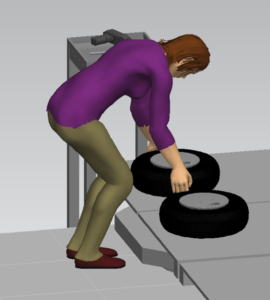
 Sandalwood is pleased to offer solutions above and beyond the traditional ergonomic assessments. With an in-depth knowledge of various digital human modelling software suites, integration and adoption to your health and safety programs has never been easier. Sandalwood is experienced in ergonomic program design as well as industry leaders in digital human modelling services. We have a diverse team that is able the leverage the results from the digital human model to provide in depth risk assessments of future designs and current state. Sandalwood is also able to pair these assessments with expertise and provide guidance on the best solution for you. Sandalwood is also on the forefront of emerging technologies and able to integrate Motion capture, Wearables, and extended or virtual reality into your ergonomic program.